Balancing Carbs Real time: Eating Well Without Losing Your Mind
You don’t need another diet. You need permission to enjoy food—while still feeling your best.
If you’ve ever wondered whether you should cut out rice, switch to brown rice, or fear carbs altogether you’re not alone.
So many women (especially after 40!) feel torn between loving real food and wanting real results.
The good news? You can have both.
Here’s what actually works based on real experience, kitchen-tested strategies, and what I’ve learned from helping busy women just like you.
Should I Cut Back on Rice to Lose Weight? (The Truth No One Tells You)
If you love rice but are trying to lose weight, you’ve probably heard conflicting advice:
“Cut out all carbs!”
“White rice is pure sugar!”
“Only eat cauliflower rice!”
But here’s what rarely gets said: You don’t have to give up rice to lose weight.
In fact, depriving yourself of the foods that your body is used to eating daily, often backfires leading to unnecessary cravings, binge eating cycles, and mental burnout in the form of stress and related ailements.
The real issue isn’t rice by itself. It’s more about how, when, and how much you eat it.
Rice Isn’t the real Problem as it is made out to be. The real culprit is the imbalance that is present on the plate!
For centuries, different cultures across Asia, Latin America, and Africa have eaten rice as a staple food without the epidemic of obesity or diabetes we see today. Why?
They ate whole or minimally processed rice (not the ultra-refined version we see today on the super market shelves).
The meals were balanced right with the right type of nutrients whether they were vegetables, legumes, fish, or fermented foods.
Daily lifestyle included a lot of natural exercise for different parts of the body which included walking and manual labour in the fields or doing household chores by hand without the use of modern machines.
Besides, eating hours were strictly regulated with fixed times for breakfast, lunch and dinner. Gone are the days of early dinners as most of us today, living in metro cities eat large portions of refined white rice late at night, after sitting in the modern office environment all day long.
Paired with instant curries and ready-to-eat combos, to save on cooking time, these ingredients spike blood sugar levels, trigger fat storage, and leave us hungry hours later, thanks to the chemical ingredients and the dangerous “S” factor, whether it is sugar or sodium. The ultimate solution isn’t about the entire elimination of rice from the plate, its about strategic inclusion, with the right type of foods.
Balancing Carbs in Real Life: Should I Cut Back on Rice to Lose Weight?
Eliminating rice as a type of food from your plate isn’t the answer to your question. Discovering how to maintain the level of nutritional imbalance is.
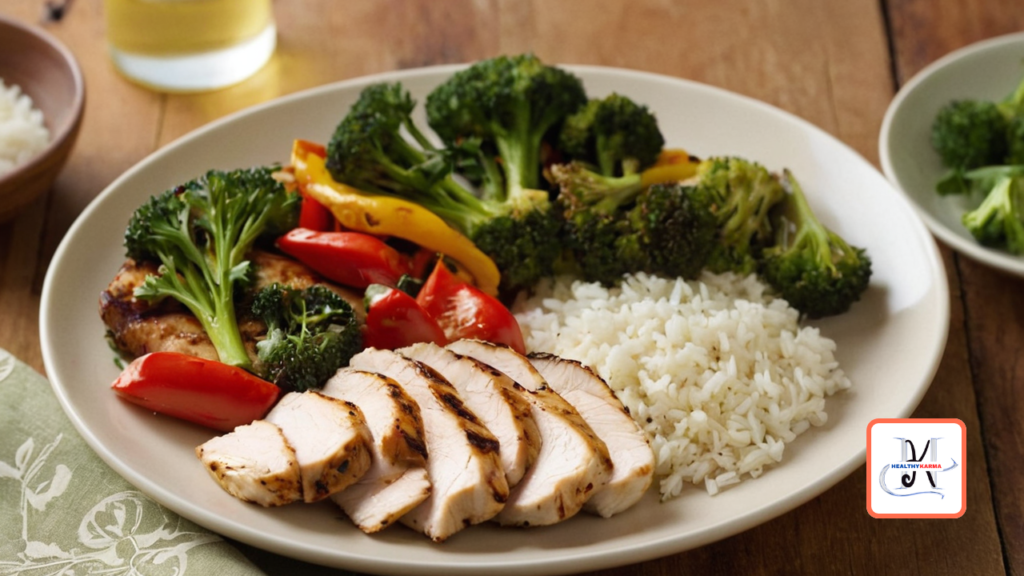
Think of the calories in your huge bowl of rice which a small side of chicken that you have put in. With rice as the main dish, blood sugar levels spike, midnight cravings follow, and weight loss stalls in the long run.
But when you reposition your plate as a whole with rice as a side dish, just ¼ of your plate, paired with the right amount of protein in the chicken and fiber from the veggies or the lentils, you’re not restricting the intake of carbs…you’re rebalancing carbs the sustainable way.
3 Simple diet Shifts That Make Rice Work wonders for Your Health Goals
1. Make rice a side dish, not the mains.
→ Fill ½ your plate with non-starchy veggies
→ ¼ with lean sources of protein whether you like chicken, tofu, lentils, or eggs.
→ ¼ with rice (real rice, not the polished version!)
This well “balanced plate” naturally reduces calories without having to count them and keeps the stomach full till breakfast without craving for a midnight snack! This simple shift stabilizes the energy levels, reduces cravings, and supports gentle, lasting weight loss—without giving up the foods you love.
2. Pair rice with the right amount of protein and dietary fiber.
→ Add black beans to your rice bowl.
→ Serve stir-fried rice with tofu and broccoli.
→ Top your rice with grilled salmon and sautéed greens.
The right combination of protein and the fiber slows down the digestion process, preventing blood sugar spikes and crashes.
3. Enjoy rice at an early dinner.
→ Your body handles carbs more efficiently when you’re active.
→ A heavy rice-based lunch fuels your afternoon just right.
→ A huge rice-heavy dinner after a desk job? Not ideal.
→ But what if dinner is your only relaxing meal of the day after a stressful day at work? Still enjoy it just make sure to keep the portion small.
Brown rice v/s white rice the battle continues...
Brown rice no doubt more nutritious as it has more fiber and other macronutrients great for you if your digestive system can tolerate it well.
But white rice isn’t “toxic”, as it is made out to be, thanks to popular opinions. It’s actually much easier to digest, and in some cultures, it has been the staple food for centuries together. Its perfectly fine when taken in moderation, especially if you’re older or have gut sensitivities. Therefore, before making a decision, you need to understand your body well.
Contrary to popular opinions, remember that a well balanced meal with carbs like rice or pasta is considered healthier than a so called “healthy” meal that leaves you feeling hungrier in the present and then binging later in the day.
Tired of restrictive diets not giving the results that you desired?
☛ This might resonate well with you as well.
you might also understand...
“Why carbs aren’t the enemy they’re just misunderstood. As a health advocate, I’ve answered dozens of real questions about rice, pasta, blood sugar, and balanced eating on Quora. Here are my most practical insights no fads, just real-life strategies.”
Is brown rice really healthier than white rice?
Many assume white rice contain empty calories; however the truth is more nuanced. Understanding the right context and pairing with the right tpye of foods makes all the difference. Learn why cutting it out completely from your diet plan may backfire especially after 40.☛ Explore the full answer on Quora…
How did traditional cultures manage to eat white rice without getting diabetic?
Rice has been a staple food for centuries across the Asian subcontinent. Traditional cultures did not get diabetic by eating rice because of a simplistic lifestyle and diabetes is a disease related to lifestyle. Discover the 3 ancestral habits that protected the health of our ancestors.
☛ Explore the full conversation on Quora…
☛ Explore the full conversation on Quora…
Should I cut back on my carb intake while i am trying to lose weight?
Contrary to popular opinion, cutting food groups from the diet plan often backfires on your weight loss plans. Suddenly restricting foods you eat regularly often leads to rebound cravings. Instead, try ‘carb balancing’: modest portions paired with the right nutrient. No willpower only commitment needed. ☛ See the full take on Quora…
How to Eat Well When You’re Too Busy to Cook?
Time is always a concern, particularly for a woman managing multiple roles. When time is tight, balancing diet doesn’t require perfection just smart shortcuts. Discover the “3-Part Plate” rule that keeps you and your family going strong even on your most chaotic days.
☛ Join the discussion on Quora…
the right Nutrition on the go whenever hunger strikes.
Hunger has no right time and can strike anytime, anywhere. Eating while always on the run doesn’t mean sacrificing nutrition for your body. Discover ideas to build the right balanced meal anywhere, anytime so as to stay full, focused, and free from afternoon crashes.
☛ Join the full conversation on Quora…
Building Healthy Habits Without the dieting dilemma
Managing a sustainable, yet healthy lifestyle isn’t restrictive rules that prevent you from eating your favorite foods it’s about real habits that help your lifestyle grow. Explore how “habit stacking” and lifestyle upgrades create lasting change without willpower or experiencing guilt.
☛ Read the converse on Quora…